Chromesthesia · philmarksmusic.com

Immersive Arts Recorder

108 Music-Reactive Worlds · One File · No Subscription

Drop in a song. Pick a world. Press Record. The video writes straight to your disk as the song plays — no editor, no render queue, no watermark. A complete audiovisual studio in a single HTML file, recording up to 4K, and everything you make is yours to use and monetize.

✦ No AI — hand-built worlds driven by the mathematics of your music

Get the Recorder — $29.99

One-time purchase · no subscription · free updates

Fourteen days, full refund, no explanation required. Desktop or laptop · Chrome or Edge · Windows, macOS, or Linux

See what comes out of it

Films made with the Recorder — every frame recorded straight from the app, nothing added afterward.

Eight wings · one hundred and eight worlds

The mala number — organized so the library feels like a gallery, not a list.

🌐
360° Worlds
Thirteen full immersive environments — cosmic dome, temple, wormhole, nebula, volcano.
True 4D Geometry
Four-dimensional forms rotating through dimensions the eye can almost follow.
🌿
Living Nature
Aurora, koi, whalesong, fireflies, jellyfish blooms, spiral galaxies.
🪷
Sacred Spaces
Enso, mandalas, rose windows, lantern festivals — built for devotional music.
Physics & Instruments
Pendulum waves, Tesla storms, the orrery, gears, fireworks.
📱
Portrait Worlds
Twenty-two vertical 9:16 worlds recording phone-native Shorts and Reels.
🌾
Slow Fields
Drifting gradients and long, quiet motion — built for ambient and meditative music.
Curiosities
Vinyl, lava lamp, ink in water, bonfire, neon rain.

Who this is for

  • Musicians who need video. You have the music and no way to put a picture behind it. Every release needs a video; you don't want to learn After Effects to get one.
  • Sound healing and meditation channels. Long-form ambient work needs long-form visuals. Stream-to-disk means an hour-long take is limited by your drive, not your RAM.
  • Bands playing live. Four cameras, a projector behind the stage, and worlds that answer the room frequency by frequency.
  • Freelancers. Everything you make is yours to sell. One purchase covers every client video you ever deliver.

Your photos and videos, alive inside the music

Drop your own photos and videos anywhere on the window and they drift and pulse with your song, composited right into the world — and into your recordings. Set a backdrop photo behind everything. Open up to four USB cameras at once as living tiles and film your band while the music plays.

Play it live, behind the band

Open one camera or four and the worlds move to whatever the room is making — your voice through a mic, the horn section, the kit. You don't need an interface to try it: the laptop's built-in microphone works as an input, so the graphics read the room live from the moment you hit start. Send the output to a screen at 4K and the band plays in front of a world that's answering them frequency by frequency. Put the spectrum itself on screen if you want the music made visible, or keep it hidden and let the world do the talking. Record the same take while it's happening, or just let it run for the length of the set.

One honest requirement: this needs a video screen or projector behind the band. The software makes the picture — the venue has to be able to show it.

A recorder built like you'd want it built

1080p, 1440p, and 2160p 4K at 30fps, supersampled at 60 Mbps. Stream-to-disk recording writes straight to a file, so take length is limited by your drive, not your RAM. One-tap calibration to −14 LUFS — YouTube's loudness target — with a brick-wall safety limiter and fade in/out. An elegant title card, artist and song, opens every take.

No AI — mathematics and craft

Every one of the 108 worlds is hand-built procedural art. Nothing here is generated by AI: no machine-learning models, nothing trained on other artists' work, no prompts. The app performs real-time spectrum analysis on your music — reading the actual frequencies as they sound — and that mathematics drives every motion, color, and shape, frame by frame. What the worlds draw comes from exactly two sources: the code, and your music.

That's a statement about the worlds, not a restriction on you. The photographs and clips you bring into the Living Gallery are entirely your choice, and the app neither knows nor cares where they came from — a phone snapshot, a scanned negative, a frame you generated somewhere else. If AI imagery is part of how you work, it composites exactly like any other picture, drifting and pulsing with the music alongside everything else. The line is simply drawn: nothing here is generated for you, and everything you bring into it is yours to decide.

And it's honest about what it is

This is a desktop studio for Chrome and Edge on Windows, Mac, or Linux — deliberately. Long 4K takes, Multi-Cam, and the built-in instrument need a real computer. Your phone's job is different: record the Portrait Worlds on your computer, and your Shorts play beautifully on every phone on earth. The app itself runs fully offline — it needs no account, and your audio and images never leave your machine. (This website uses standard analytics; see the privacy policy.)

Everything you create — YouTube videos, client work, live shows, streams — is yours to use and monetize, forever. No subscription. Nothing else to buy. Free updates.

Questions people ask first

What audio files does it take?
Anything your browser plays — WAV, MP3, FLAC, M4A, OGG. Drop the file in and it reads the frequencies directly. You can also feed it live audio from a microphone or an interface instead of a file.
Can I use AI-generated images or video with it?
Yes. The Recorder itself contains no AI — the 108 worlds are hand-coded and driven by real-time analysis of your music, not by a model. But the Living Gallery takes any image or video file your browser can open, whatever made it. AI stills, AI clips, your own photographs, scanned film, footage off a camera: they all composite into the world the same way. The software has no opinion about the source of your pictures.
Do I need a powerful computer?
For 1080p, any reasonably modern laptop is fine. For sustained 4K takes and multi-camera work you want a real desktop-class machine with a discrete GPU. The worlds render in real time, so what your computer can draw is what it can record.
How long can a single recording be?
As long as your drive has room. Recording streams straight to a file rather than buffering in memory, so hour-long ambient pieces record in one unbroken take.
Can I sell what I make with it?
Yes — without restriction or royalty, permanently. YouTube videos, client work, live shows, streams, commercial releases. The only thing you can't sell is the software file itself.
Is there a watermark?
No. No watermark, no logo, no export limit, no trial period. What you record is what you get.
Does it work on a phone or iPad?
No, and deliberately so. This is a desktop studio for Chrome or Edge. The Portrait Worlds record vertical 9:16 video on your computer — those files then play beautifully on every phone there is.
What happens when you update it?
Updates are free forever. Gumroad emails you when a new version is posted and you download the new file.
Does my music get uploaded anywhere?
Never. The app runs entirely inside your own browser and works with no internet connection at all. Your audio, photos, camera feeds, and recordings never leave your machine.

Who made this

I'm Phil Marks — a drummer and vibraphonist, Berklee-trained, playing since 1975. Jazz clubs, road work, and a long time spent watching what music does to a room.

I built the Recorder because I wanted visuals for my own music and couldn't find any that were actually listening to it. It's the same tool behind my YouTube channel — 176,000 subscribers, and every film there recorded straight out of the app. Everything on this page — the software, the films, the books below — comes out of the same fifty years on the bandstand.

Get the Recorder — $29.99

Questions before you buy? Email me and I'll answer personally. — Phil Marks · Chromesthesia


The Books

A lifetime in music, on the page — available on Amazon in paperback and Kindle.
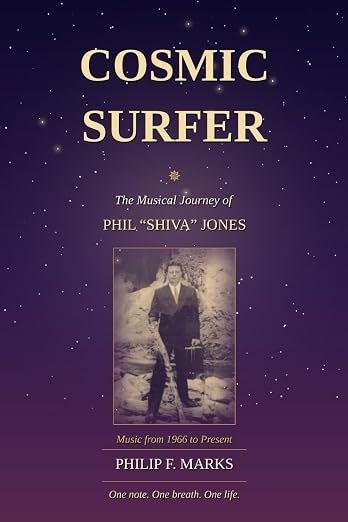
Cover of Cosmic Surfer
Biography
Cosmic Surfer: The Musical Journey of Phil "Shiva" Jones
London, 1969. In a basement below a fish-and-chip shop in Ladbroke Grove, five musicians called Quintessence set out to do something rock had never done. At the heart of the sound: Phil "Shiva" Jones — raised on Delta blues, named in a London ashram, fronting what was reportedly one of Jim Morrison's favorite bands. This is that story.
Get the book — all stores & formats →
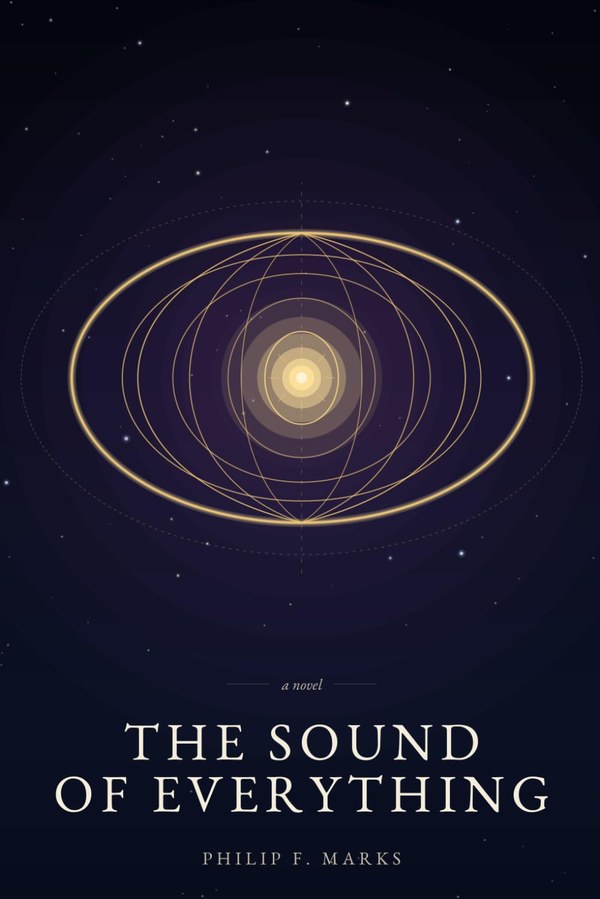
Cover of The Sound of Everything
Fiction
The Sound of Everything
In Selene Cove, the day begins with a meditation bell before sunrise. When a developer builds an app to prove that minds in meditation truly connect, a wary neuroscientist and a young researcher are pulled into an experiment that blurs the line between what science can measure and what only the heart can know.
Get the book — print & eBook →
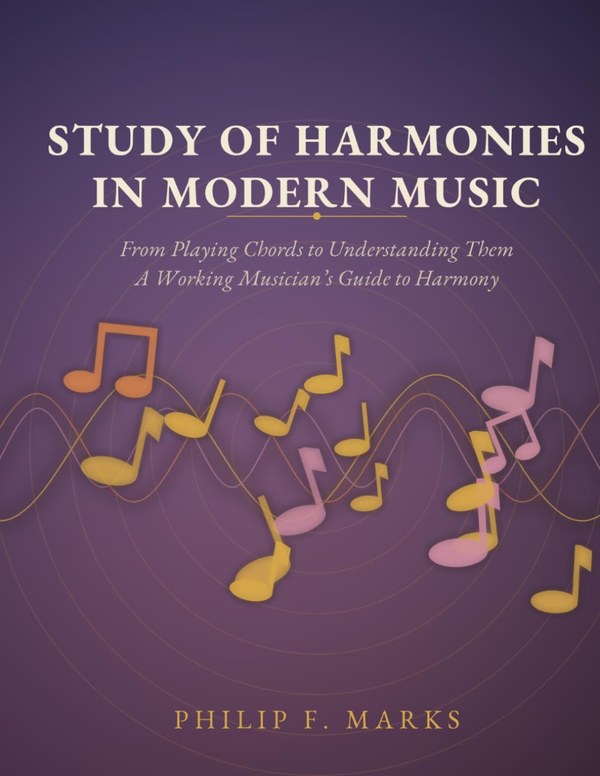
Cover of Study of Harmonies in Modern Music
Music Theory
Study of Harmonies in Modern Music
From Playing Chords to Understanding Them — A Working Musician's Guide to Harmony
Eastern and Western theory, with analysis of industry legends — including Quintessence. Harmony built from fifty years on the bandstand rather than the lecture hall.
Get the book →
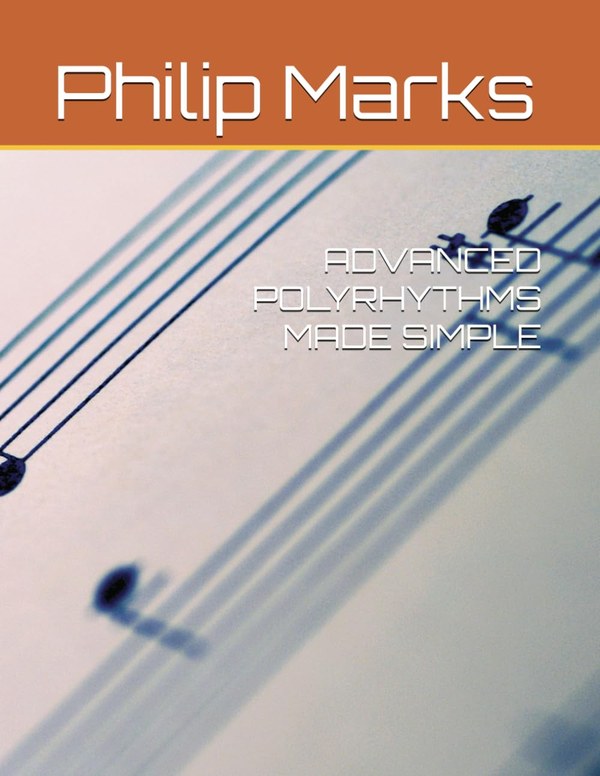
Cover of Advanced Polyrhythms
Drumming
Advanced Polyrhythms Made Simple
The mystery taken out of complex rhythm: clear, linear patterns that let the counter-rhythms reveal themselves naturally at the drum set.
Read on Amazon →

All books by Philip F. Marks on Amazon


Free from the Studio

Cosmic Birth Chart Studio

A complete birth chart tool that runs right in your browser — Vedic and Western modes, a built-in astronomical ephemeris, nakshatra readouts, three themes, and poster-size print exports. Free, private, nothing uploaded.

Open the Studio — free →
Get the Recorder — $29.99